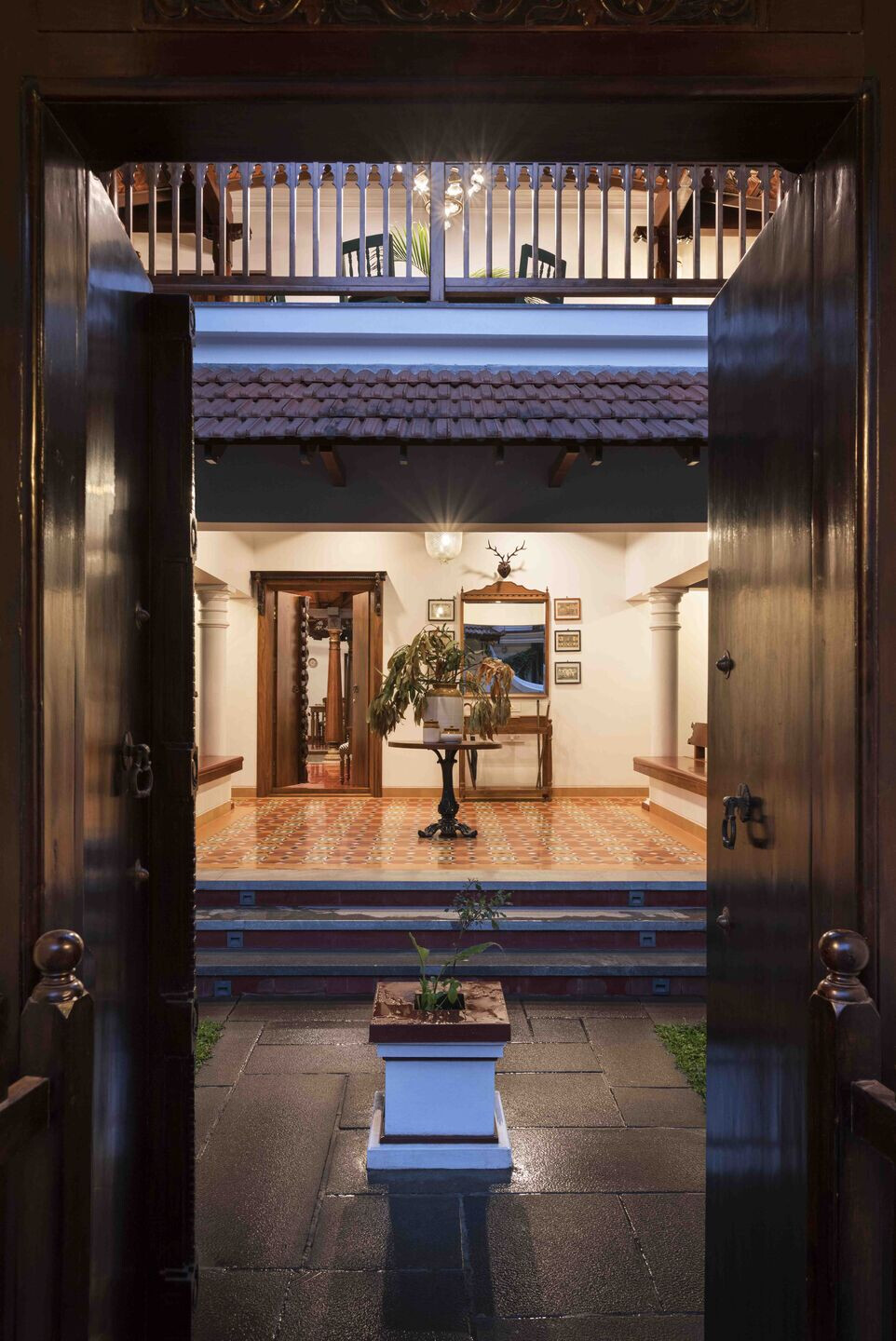
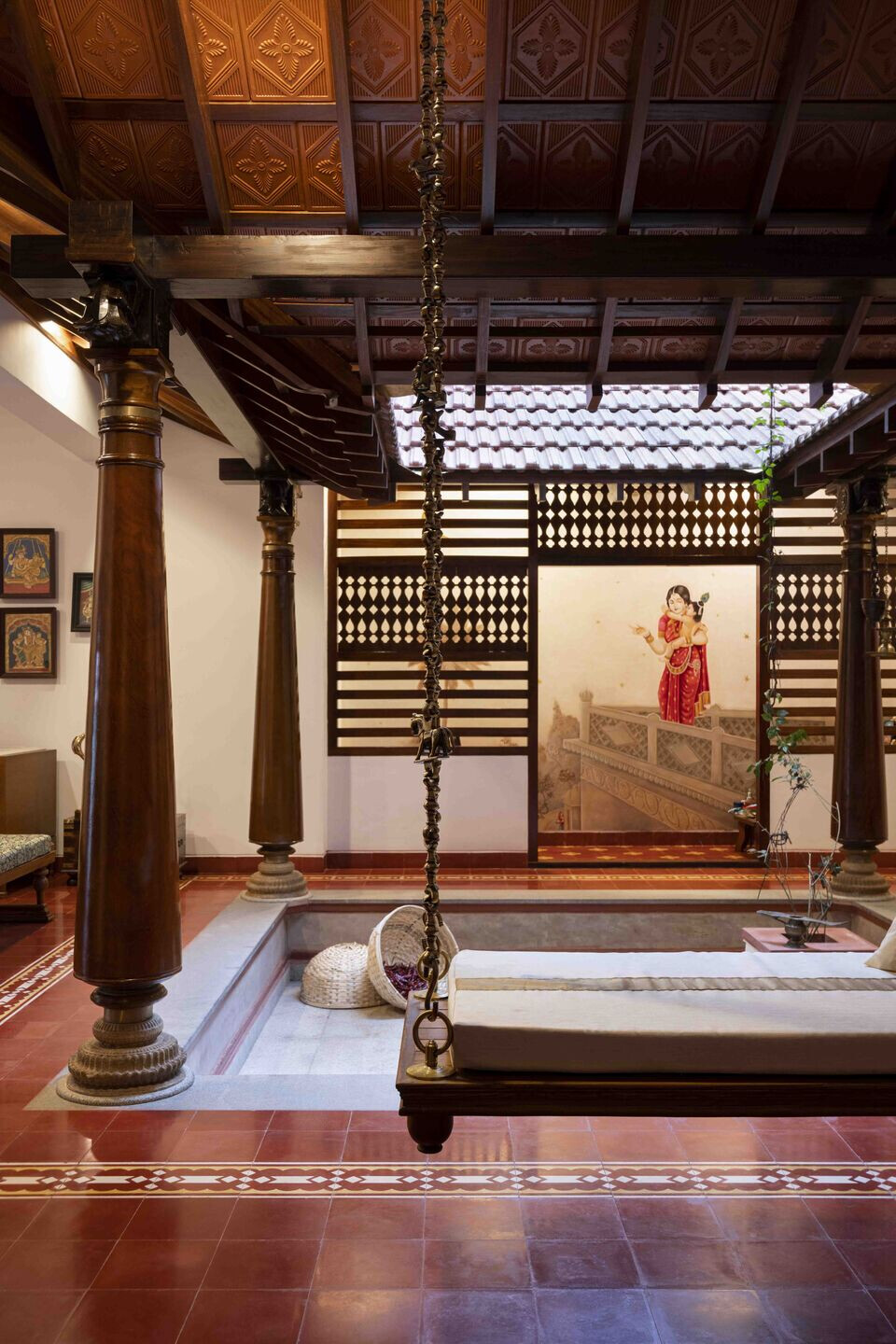
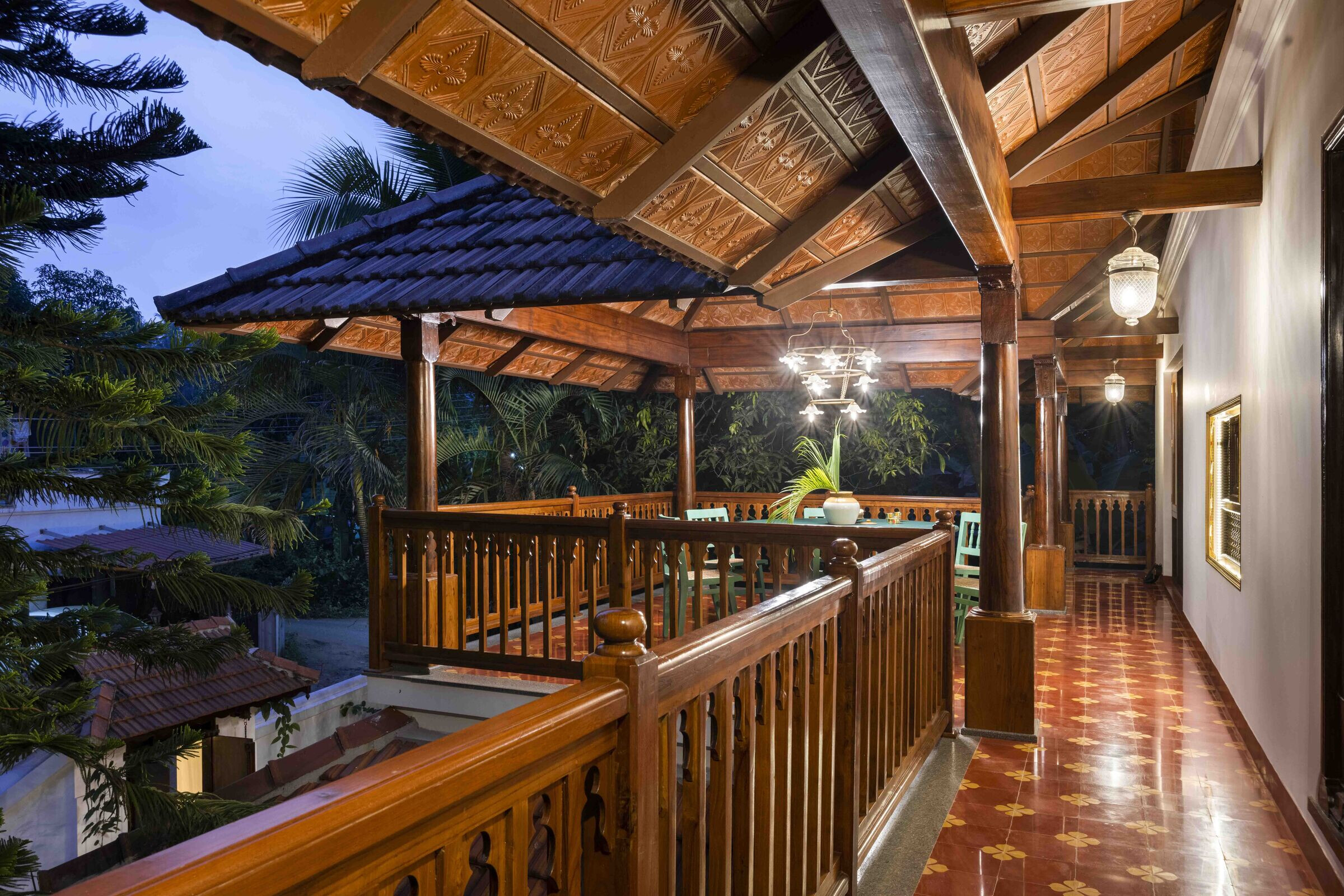
This 5,000 sq ft home in Thrissur is a Nalukettu, the traditional Kerala house built around a central courtyard, or nadumuttam. It follows the principles of Thachu Shastra, Kerala's traditional science of building, with the courtyard placed at the very centre of the house.
A home for three generations
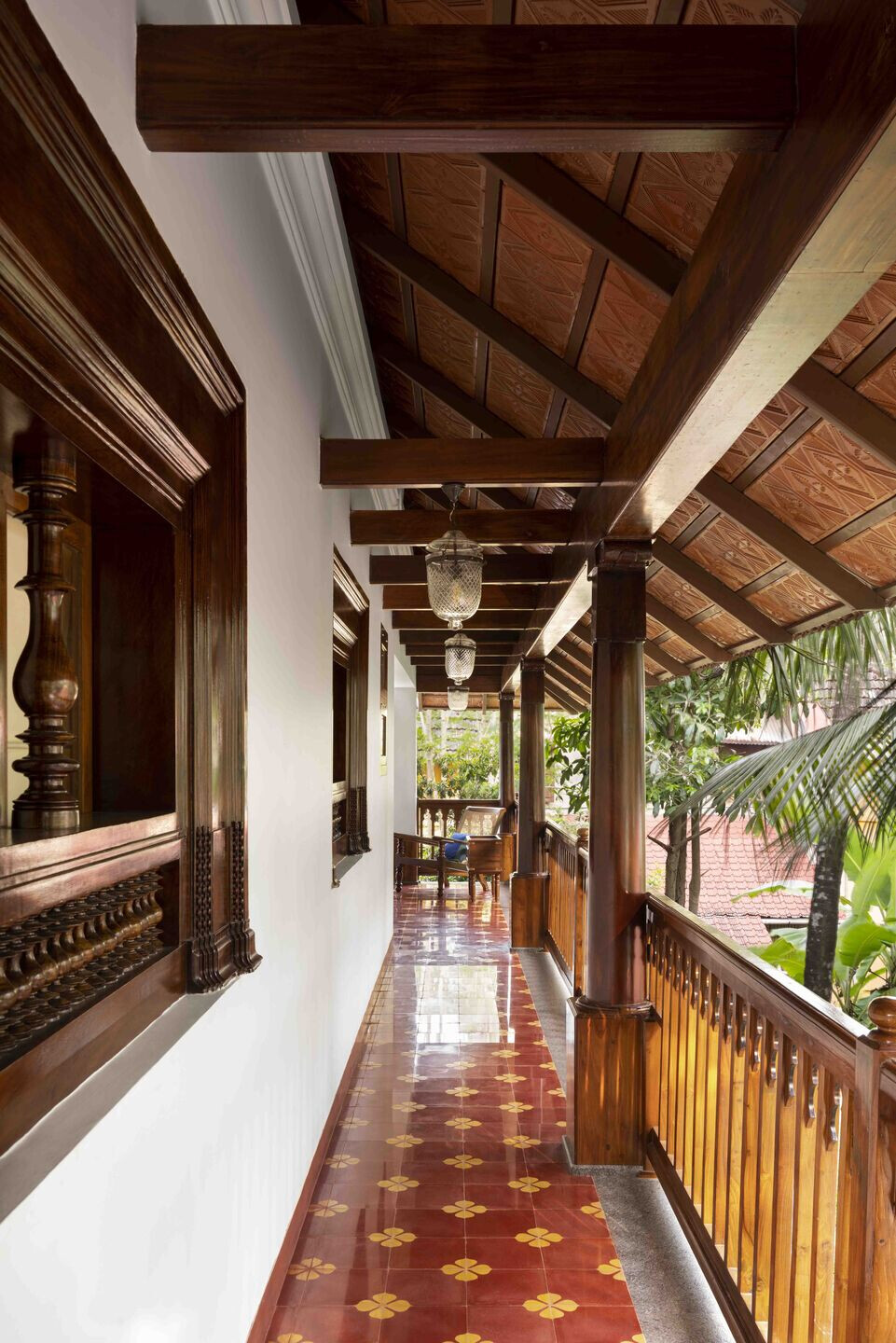
The house was built from scratch on land the client inherited from her father, in a quiet neighbourhood close to the local temple. Winding verandas run along both floors, and the plan holds a living room, a dining room, four bedrooms, a kitchen, a work area, a laundry, a pooja room, a media room and a library, for a family of five across three generations: the client, her husband, their son and her elderly parents.
Built for the monsoon
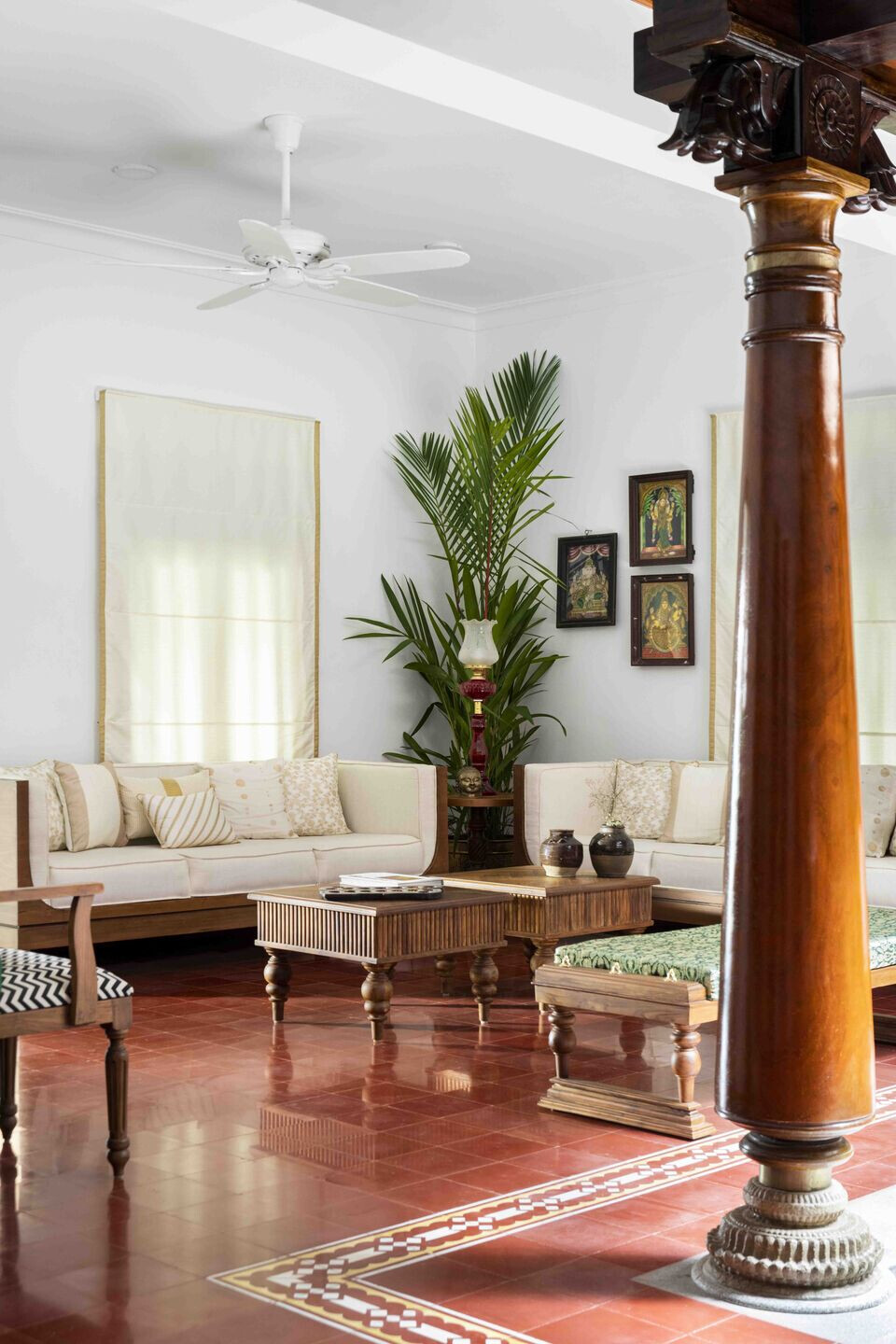
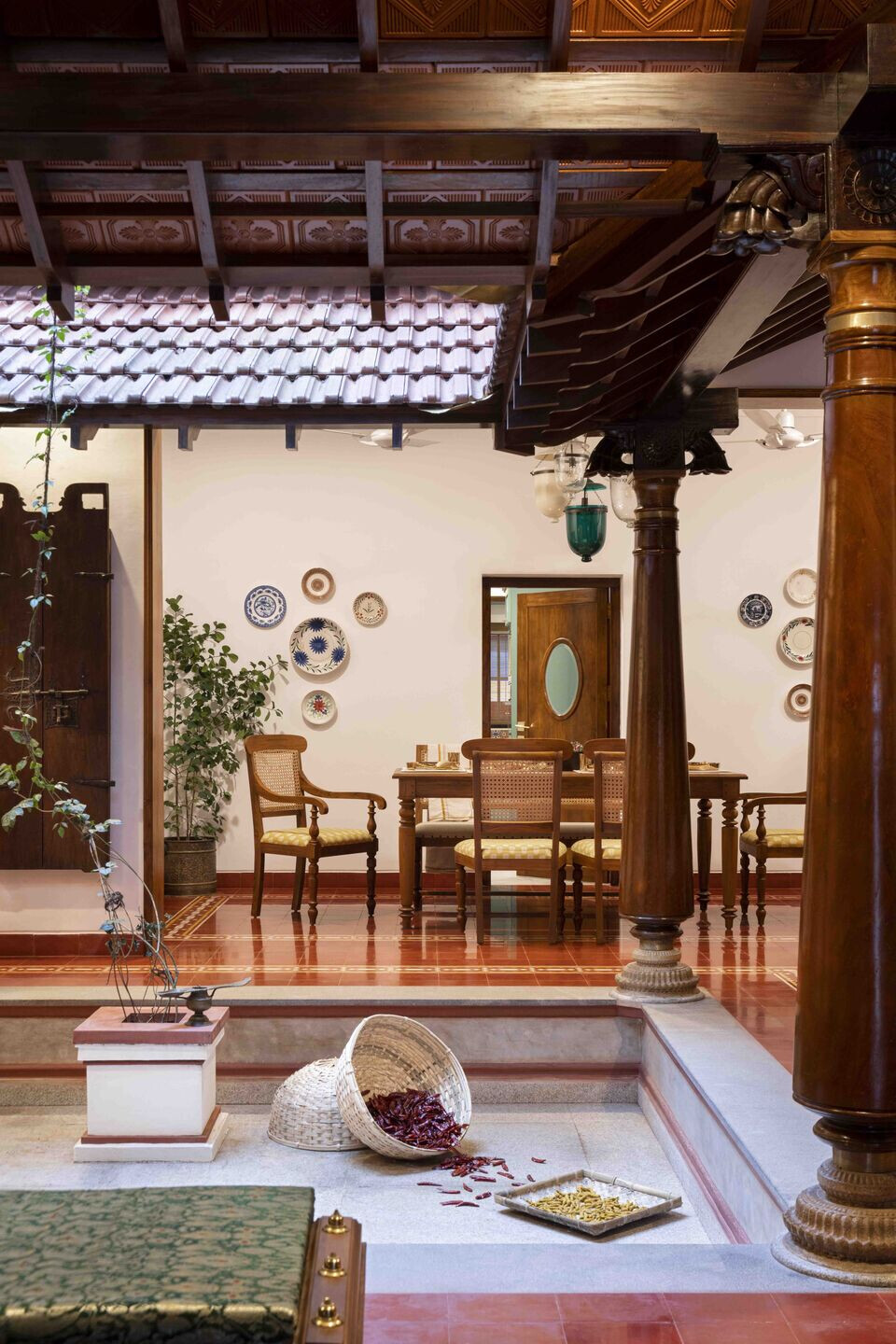
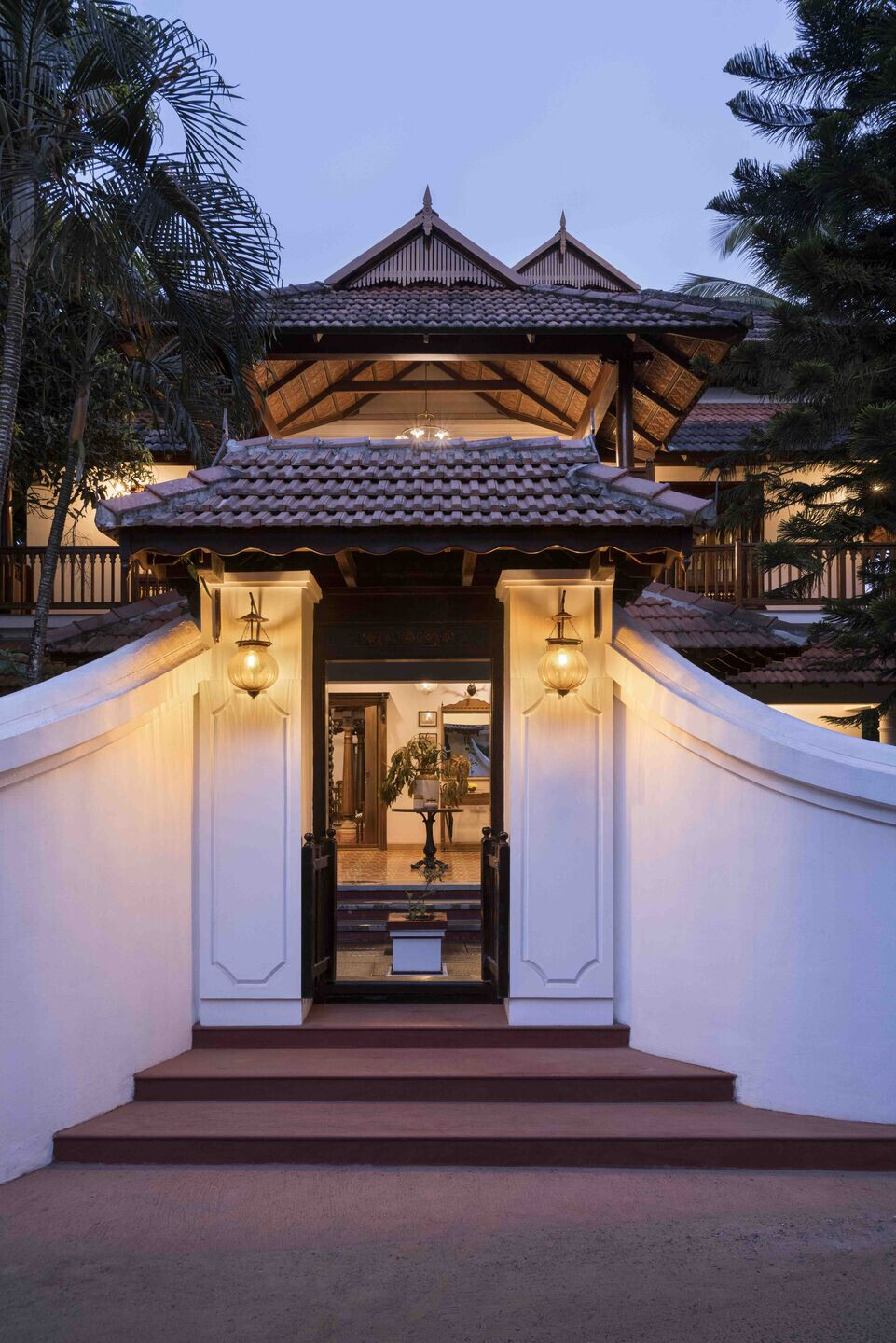
The main entrance is a padippura, a roofed gateway leading into the house. Long, steep roofs, gabled windows and tall pillars are built to withstand the heavy monsoon, and stone, wood and clay, the materials of the region, appear throughout. A veranda with passages on either side opens onto the courtyard, which connects every other room. A small garden at the front is planted with Ayurvedic plants and flowers native to the region.
Colour and meaning
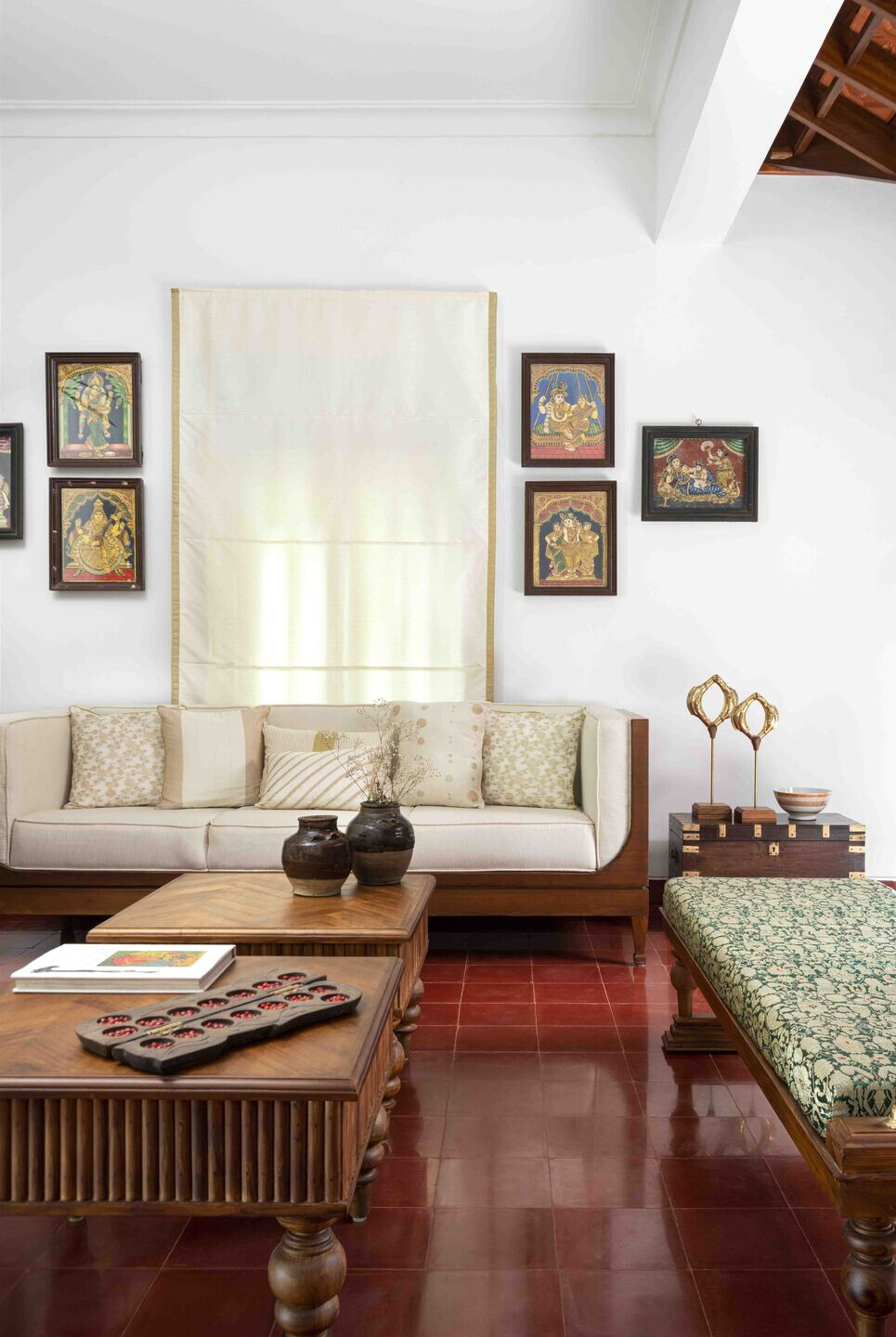
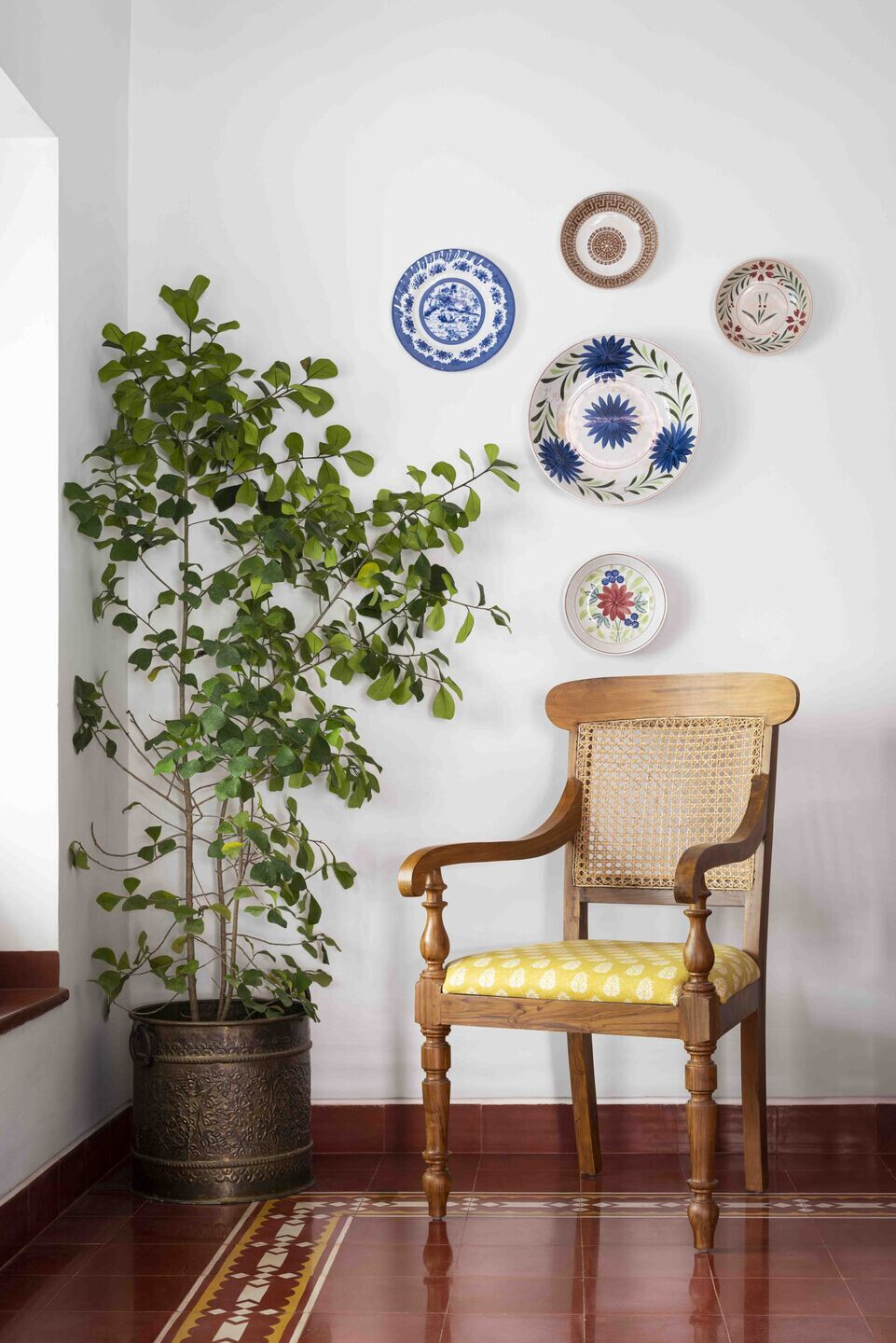
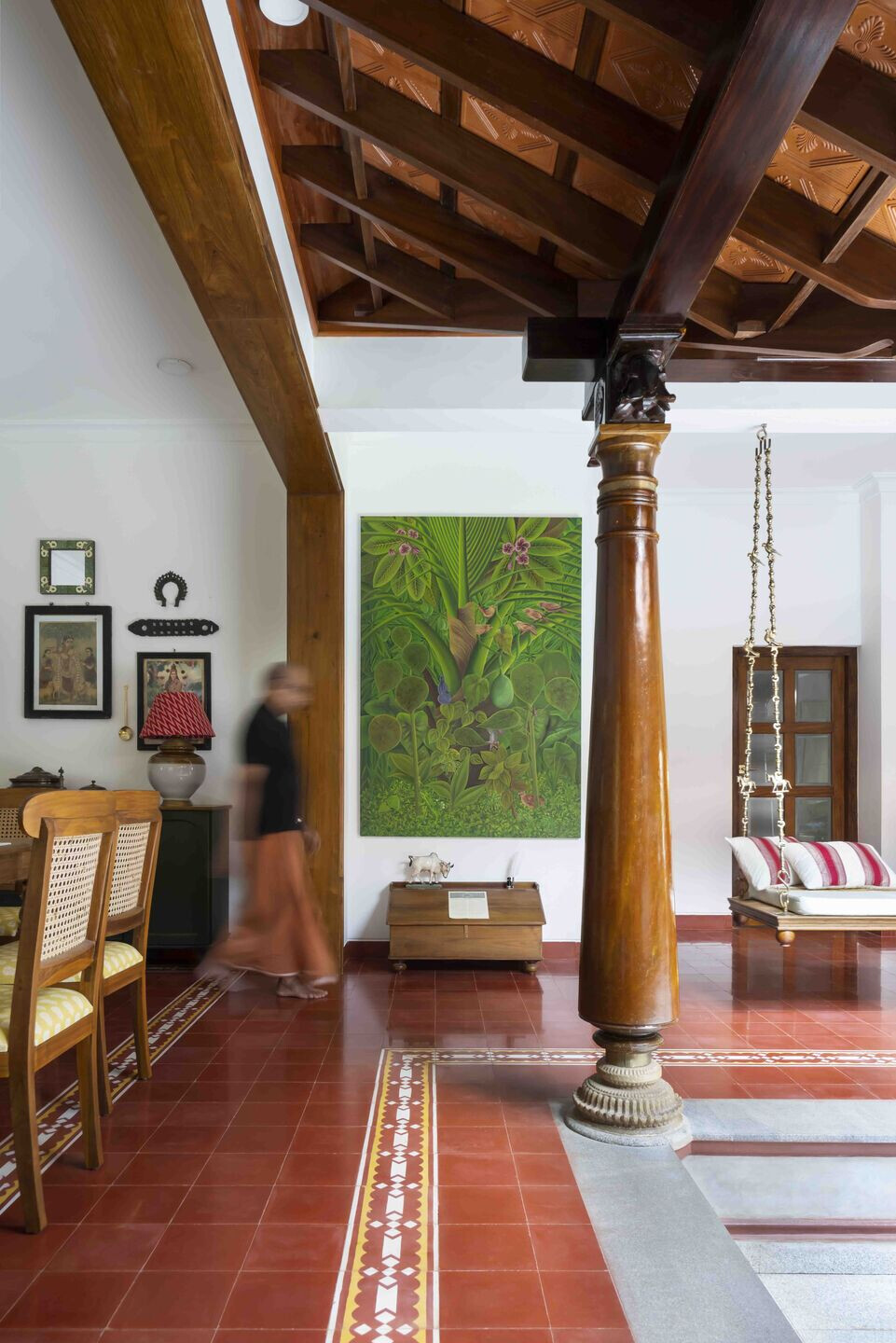
Everything in the home is bright: emerald green brocade on the bench, canary yellow block-printed dining chairs, and a green sideboard displaying old keys, mirrors and lithographs. Temple Town was given free rein over both the architectural detailing and the decoration, which is rare. A favourite space is the courtyard and the pooja room, where a mural of Yashoda and Krishna, painted by the artist S. Suneesh, reflects the bond between the client and her son.
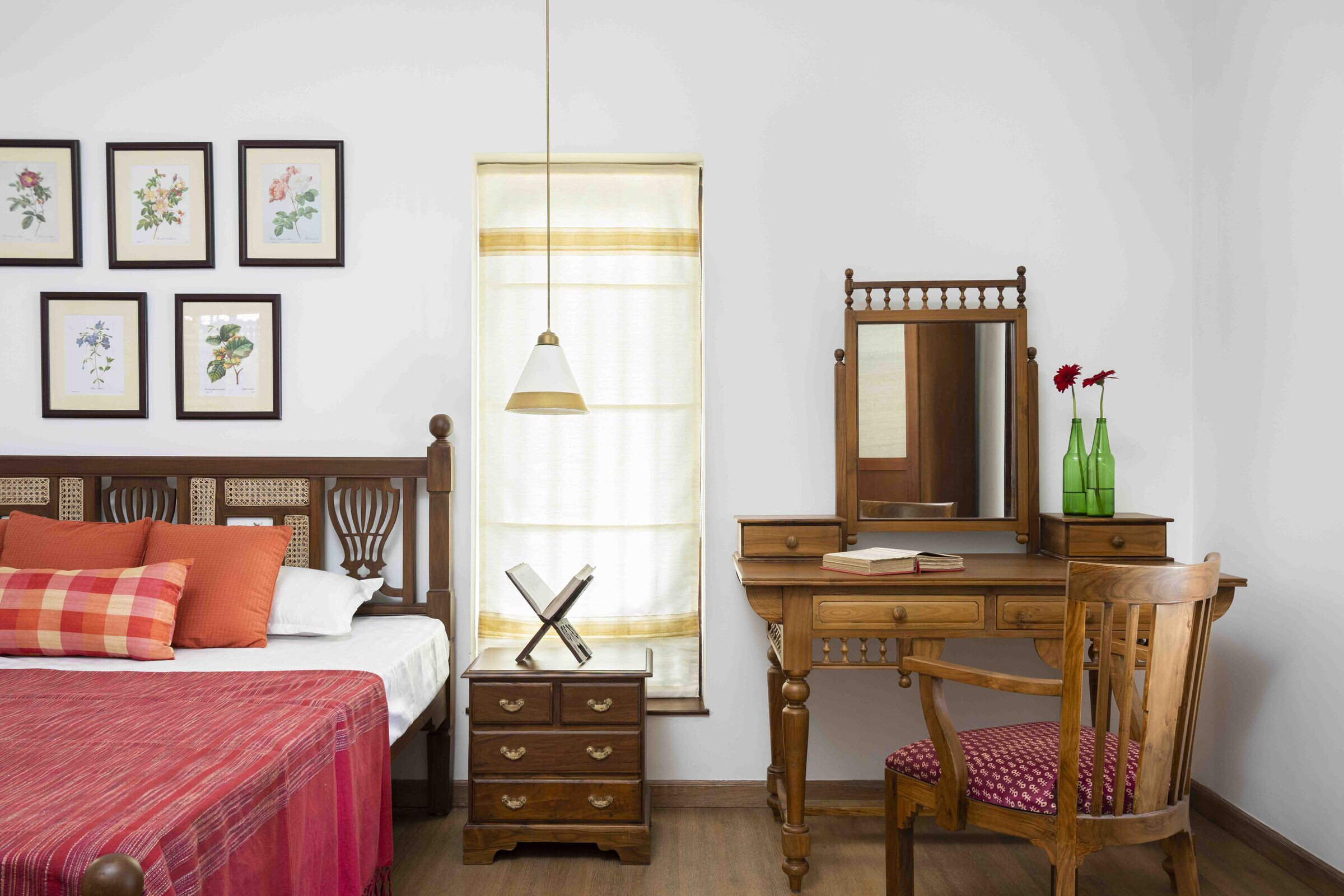
The dining room is a riot of colour: a brass thali setting with Kerala fabric napkins and lotuses, and an old wooden cooking vessel turned into a centrepiece holding a garland of tulsi and pink arali (oleander) from the garden, against walls hung with vintage ceramic plates. The colour carries on into the kitchen. The guest bedroom has a headboard set with vintage tiles, custom-made by Temple Town. The master bedroom is quieter, in muted shades and maroons, with a vintage jewellery box that doubles as a side table, an oil painting of the Carnatic singer M.S. Subbulakshmi, whom the client listens to devotedly, and 200-year-old windows sourced from Karaikudi.
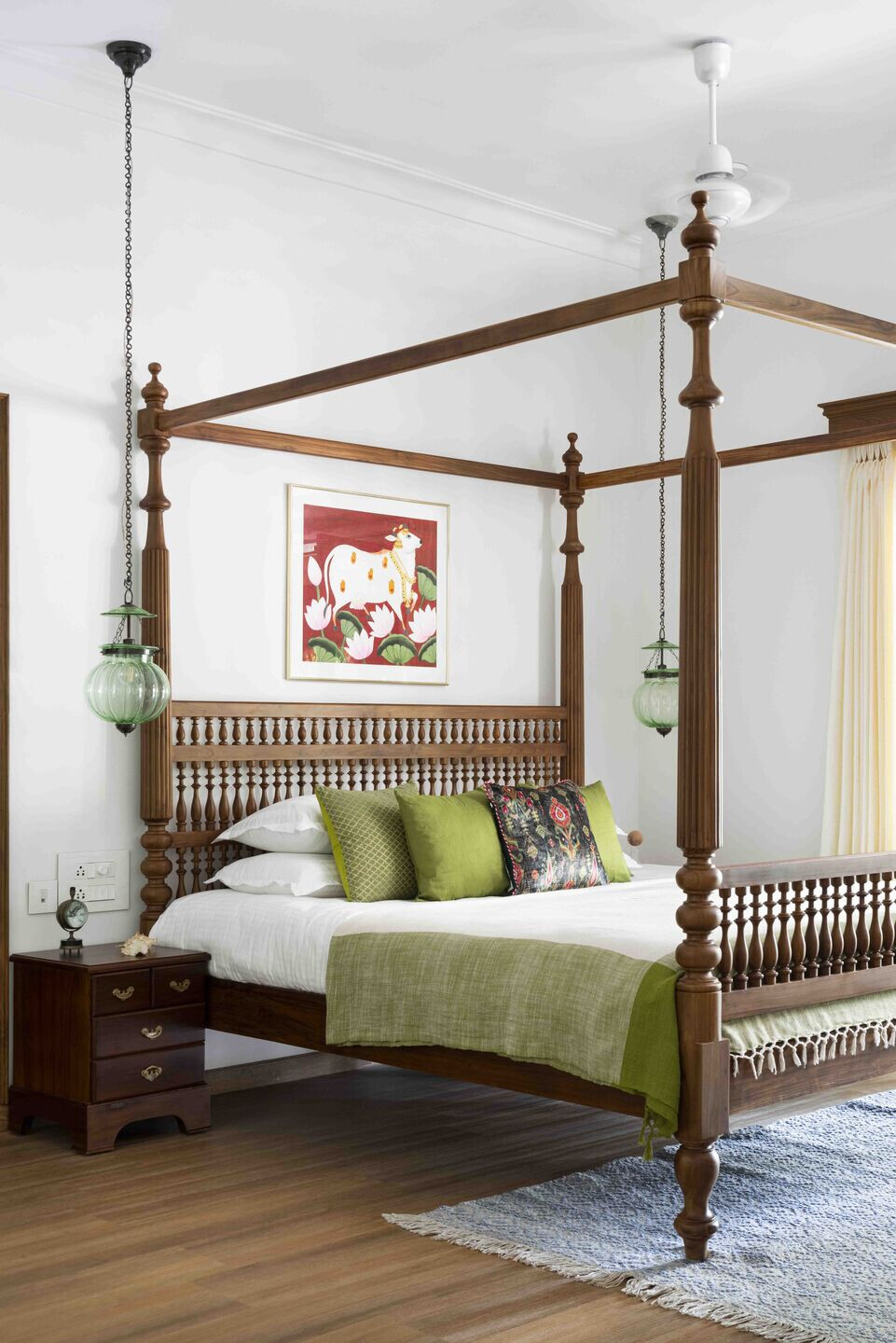
The artwork in one bedroom is especially meaningful. During Karkidakam, the Ramayana month, Kerala households recite the Ramayana throughout the month. Meera Pyarelal found a copy of the Adhyatma Ramayanam Kilippattu by Thunchath Ezhuthachan, the father of Malayalam literature, and used it as the backdrop to a colonial bed, a fitting tribute to the client's roots. The son's room has a four poster bed with traditional Kerala spindles and a painting in the Pichwai style.
The client's brief
Sandhya, the client, first visited Meera Pyarelal's own home and fell in love with its traditional tiles, furniture and antiques. She already had a clear picture of what her house should be. Having lived abroad for more than a quarter of a century, she remained deeply rooted in her culture, traditions and beliefs, and wanted to recreate the Kerala home she grew up in: a home for her parents, now in their early eighties, and a place to settle whenever she chose to return.
She had travelled across South India collecting antique windows, doors and columns, and the moment Meera saw them on her first site visit, she was committed. It became a labour of love, with every corner planned down to the smallest detail, from the size of the cornice to the colour of the tassels on the paintings. Over the two and a half years the house took to build, designer and client became close friends, and that warmth shows in the interiors.
Photography: Justin Sebastian. This project was also featured by Architectural Digest India and STIR World.
Temple Town architecture · More projects · Start a project